

How office space shapes belonging in hybrid work
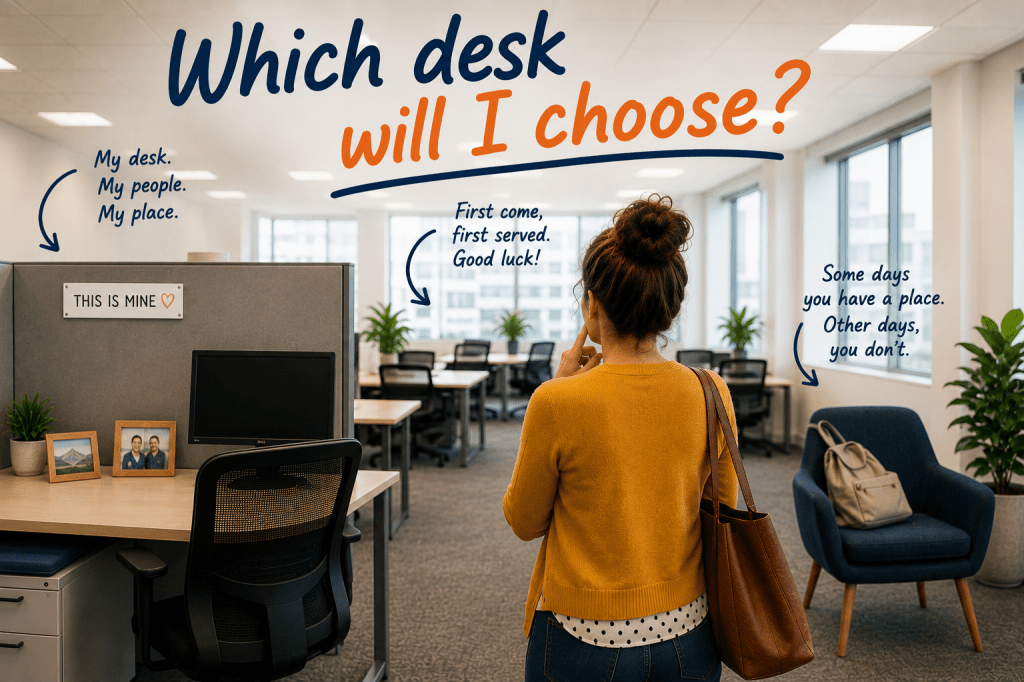
Which desk will I choose?
You wouldn’t think that question matters that much.
Then hybrid work happened.
One of the things that has surprised me during our research this summer is the number of different ways organizations manage office space.
Some employees have their own desk.
There are obvious advantages. Family photos stay put. Your favorite coffee mug is waiting for you. You know exactly where you’ll sit every morning. Over time, that little corner of the office starts to feel like yours.
The downside? Organizations need enough space for everyone, even when desks sit empty. On some days, the office feels more like a museum than a workplace.
Other organizations have gone in the opposite direction.
No assigned desks. Just find an open one when you arrive.
It’s efficient. It saves space. It also reminds me just a little too much of the middle school cafeteria, hoping there’s an open seat next to someone you know.
Some organizations split the difference. We interviewed one company where employees working in the office four days a week have assigned desks, while those who come in three days a week grab whatever is available.
Another organization, which provides both in-person and virtual therapy, gives every remote therapist a dedicated office. Leaders recognized that in-person clients benefit from seeing the counselor’s unique space and personality, even if their actual therapist is on a screen.
None of these approaches is perfect but every one of them sends a message.
A desk becomes more than a place to set your laptop. It communicates whether you have a place, whether you’re expected, and whether you belong.
As organizations continue experimenting with hybrid work, it may be worth asking one more question:
👉 What does your office space communicate to the people who walk through the door?


Leave a Reply